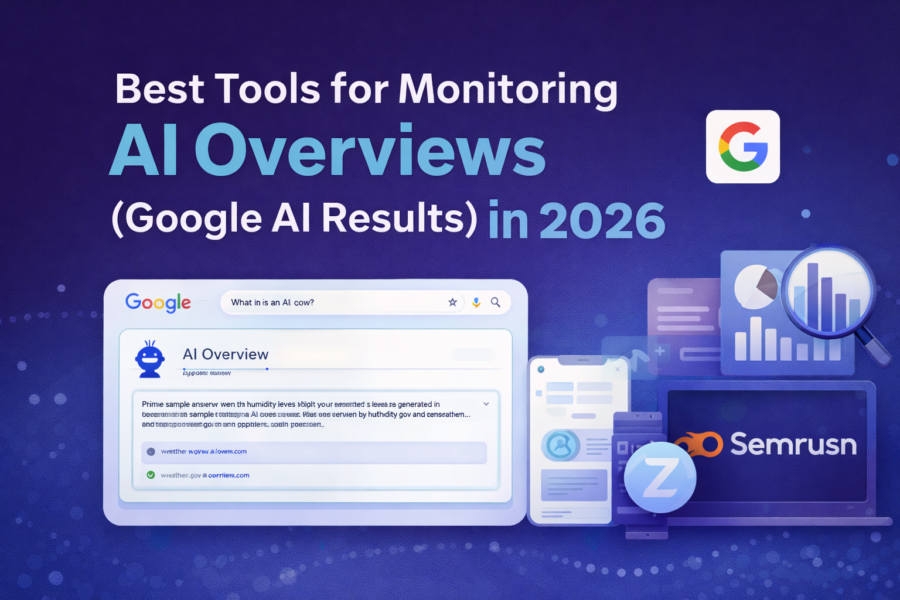
Search is changing fast. If you’ve noticed Google showing AI-generated summaries at the top of results, you’re not alone. These are called AI Overviews, and they’re already impacting how websites get traffic.
Instead of users clicking multiple links, Google now answers questions directly using AI. That means ranking in AI Overviews is becoming just as important as ranking #1.
For bloggers, SEO professionals, and businesses, the big question is:
How do we know if our website appears in AI Overviews?
The answer: use the right monitoring tools.
In this guide, we’ll cover the best tools for monitoring AI Overviews, what they do, and how you can use them to improve your visibility.
Why Monitoring AI Overviews Matters
Before jumping into tools, let’s understand why this matters.
AI Overviews:
- Reduce traditional organic clicks
- Highlight fewer sources
- Reward authoritative content
- Change keyword ranking strategy
If your content appears in AI Overviews:
- You get brand visibility
- Authority increases
- Indirect traffic improves
- Trust builds with users
But if competitors appear instead of you, they gain the advantage.
That’s why tracking AI Overview presence is now part of modern SEO.
1. ZipTie.dev (AI Overview Tracking Focused Tool)
ZipTie is one of the newer tools built specifically to monitor AI-generated search results.
What it does:
- Tracks AI Overview appearances
- Shows which queries trigger AI answers
- Identifies source citations
- Monitors competitor mentions
Why it’s useful:
This tool focuses directly on AI-driven search, not traditional rankings. It helps you see if Google’s AI is referencing your content.
Best for:
- SEO professionals
- Agencies
- Early adopters of AI SEO
2. AlsoAsked (AI Intent Discovery)
AlsoAsked helps you understand questions Google associates with your topic, which are often used inside AI Overviews.
Features:
- Question-based keyword research
- People Also Ask mapping
- Topic clusters
- Intent-based content ideas
Why it helps AI monitoring:
AI Overviews rely heavily on question-answer structured content. Using AlsoAsked helps you create content that AI prefers.
Best for:
- Content creators
- Bloggers
- SEO beginners
3. Semrush Sensor + AI Tracking (Advanced Users)
Semrush has started adding AI-related tracking capabilities.
Features:
- SERP feature tracking
- AI Overview detection (rolling updates)
- Keyword monitoring
- Competitor comparison
Why it’s powerful:
You can track:
- Keywords showing AI Overviews
- Your ranking impact
- Traffic changes after AI rollout
Best for:
- Advanced SEO users
- Agencies
- Data-driven marketers
Techztalk used this one; it’s a paid one but helps us to identify keywords for clients.
4. Ahrefs (Indirect AI Overview Monitoring)
Ahrefs doesn’t directly track AI Overviews yet, but it’s still very useful.
How to use it:
- Track featured snippets
- Monitor ranking changes
- Identify informational keywords
- Analyze competitor content
Why it works:
Most AI Overviews pull from:
- Informational content
- High-authority pages
- Structured answers
Ahrefs helps you optimize for those signals.
5. SERPstat (SERP Feature Tracking)
SERPstat tracks search result features including:
- Featured snippets
- Knowledge panels
- Rich results
- Emerging AI features
Why useful:
AI Overviews behave similar to SERP features, so monitoring them helps you understand search layout changes.
6. SEOTesting (Real Google Search Console Insights)
SEOTesting connects directly to your Search Console.
What it shows:
- Keyword impressions
- CTR changes
- Query behavior shifts
- Page performance trends
Why it matters:
When AI Overviews appear, you may see:
- Impression increase
- CTR decrease
- Position change
This tool helps detect those signals.
7. Keywords Everywhere (Quick AI SERP Insights)
This browser extension helps you quickly analyze search results.
Benefits:
- SERP layout overview
- Related keywords
- Search intent understanding
- Competition insights
Why helpful:
You can manually identify:
- AI Overview presence
- Source citations
- Content patterns
8. Manual Monitoring (Still Important)
Even with tools, manual checking is useful.
How to do it:
- Search your target keyword
- Check if AI Overview appears
- Look for cited websites
- Analyze structure
- Improve your content
What to observe:
- Answer format
- Bullet points
- Sources cited
- Content depth
- Question coverage
Manual research gives valuable insights.
What Type of Content Appears in AI Overviews?
Understanding this helps more than any tool.
AI Overviews usually pull from:
- Clear headings
- Structured answers
- List-based content
- Step-by-step guides
- Informational blogs
- Authority websites
So when writing:
- Use simple language
- Add bullet points
- Answer questions directly
- Avoid fluff
- Keep paragraphs short
Best Strategy to Get Featured in AI Overviews
Use this simple checklist:
✅ Answer user questions
✅ Add FAQ section
✅ Use H2 and H3 headings
✅ Provide accurate information
✅ Use lists and tables
✅ Keep content readable
✅ Add updated year (2026)
✅ Cover topic fully
How Often Should You Monitor AI Overviews?
Recommended frequency:
- New blog → Check after 3 days
- Important pages → Weekly
- Main keywords → Monthly
- Competitor tracking → Monthly
AI search results change frequently, so regular monitoring helps.
Free vs Paid Tools
If you’re just starting, you don’t need expensive tools.
Start with:
- Manual checking
- Google Search Console
- Keywords Everywhere
- AlsoAsked (limited free)
Upgrade later:
- Semrush
- Ahrefs
- SERPstat
Common Mistakes to Avoid
Many bloggers make these mistakes:
❌ Only tracking rankings
❌ Ignoring informational keywords
❌ Writing thin content
❌ No structured headings
❌ Over-optimizing keywords
AI prefers natural, helpful content, not keyword stuffing.
Future of AI Overview Tracking
AI search will continue growing. Soon:
- More queries will show AI answers
- Fewer organic clicks
- Higher competition
- Authority signals more important
Early adopters who optimize now will benefit most.
Final Thoughts
Monitoring AI Overviews is becoming essential for modern SEO. Traditional rankings still matter, but AI visibility is the next big metric.
You don’t need expensive tools to start. Begin with simple tracking, focus on helpful content, and optimize based on AI patterns.
Over time, your content can appear in AI summaries, increasing your brand visibility and authority.
The key is consistency:
- Write useful content
- Track performance
- Improve structure
- Monitor competitors
Do this, and you’ll stay ahead in the evolving search landscape.